Link The Suffering
©1996-2017 Roedy Green of Canadian Mind Products
Book referral for Handbook to Higher Consciousness
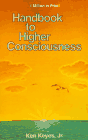 |
recommend book⇒Handbook to Higher Consciousness |
| by |
Ken Keyes Jr. |
978-0-9600688-8-3 |
paperback |
|---|
| birth |
1921-01-19 1995-12-20 age:74 |
978-0-9600688-9-0 |
hardcover |
|---|
| publisher |
Love Line |
978-0-940687-13-4 |
audio |
|---|
| published |
1984-08-01 |
|---|
| Ken’s classic. This is by far his best selling book. You can read part of it online. |
|
| Greyed out stores probably do not have the item in stock. Try looking for it with a bookfinder. |
Ken does his deepest discussion of the Link the Suffering in
Handbook to Higher Consciousness.
I teach one thing and one only: that is suffering and the end of suffering.
~ Gautama Buddha (563 BC 483 BC age:80)
Living Love Workshop leader, Steve Henderson, considers link-the-suffering a fine
surgical scalpel for removing addictions quickly and painlessly. I am just beginning to
learn how to use it.
The idea is, any time you feel emotional pain, you make sure you blame it on the
addiction, not on the event.
So for example, let us say you asked somebody to dance and he/she put his/her finger
down his/her throat to simulate vomiting. You might feel some hurt, anger or disgust.
Instead of telling yourself what an obnoxious boor this turkey is, or beating yourself
up for being so repulsive as to deserve such treatment, you put 100% of the blame squarely on the shoulders of your
addictive demand.
You tell yourself, "This would not hurt if I did not have an addictive demand
that people decline my invitations politely. All this pain is being caused by my
addiction. I wish I could get rid of the addiction, then I could laugh off events like
this without any emotional injury. Other people can do it. Why must I be so ridiculously
vulnerable? This sort of thing is going to happen again and again. If I don’t
reprogram this now, there will be a ton more suffering from similar events in future. How
long must I suffer before I give up this stupid addiction? It means nothing about me that
he/she pretended to vomit, just a lot about him/her. Why should I get
upset about his/her problem?"
You mentally list the advantages (payoffs) and
disadvantages (ripoffs) to continuing to hold onto
the addiction. These are not the advantages/disadvantages of getting what you want, but
the advantages/disadvantages of making your self miserable when you don’t get it.
Much of the time we are thinking like a two year old "If I get upset enough,
Daddy will relent and fix it."
Most of the time the payoffs are illusory. You think you will get them by holding onto
your demand, but you don’t. You only get them when you get your demand met, quite a
different thing. Very often your addiction gets in the way of getting what you want.
Consider the example of a man horny out of his mind trying to get laid. He is so pushy he
turns off everyone he approaches. If he could make his approaches from a less desperate,
more preferential frame of mind, he would have much better success.
Typical Payoffs
- If I feel guilty, it will help stop me from repeating the foolish thing I did.
- If I feel frightened, it will help remind me to avoid getting into tense situations
like this again in future.
- If I hold onto this demand firmly, it will help me get what I want because I will
work harder to get it. Unfortunately addictions drastically drain your energy and give
you tunnel vision, which hurt your chances of satisfying the addiction.
- If I suffer, I will enjoy it more when I finally do get what I want. For example,
if I let myself feel really horny and frustrated, sex will feel even better when I
finally get it. If I starve myself before Christmas dinner, it will taste even better.
If I did not suffer there would be no contrast. Life would be tepid.
- If I hold onto this demand, I will give the matter its proper attention. If I
dropped the demand, I might let this situation slide.
- I get to be right and make the other person wrong. I get to feel superior.
I’ll prove its unfair or untrue.
- I get attention, sympathy, approval or comfort.
- I avoid taking responsibility for what I do, say or feel. I can avoid looking at
what is in my life. I don’t have to experience what I am feeling.
- People will know that I’m (a good teacher, a responsible parent, a caring
person, a skilled bricklayer, etc.).
- People won’t think I’m (egotistical, a coward, etc.).
- I have an excuse for poor performance e.g. I was so nervous, how they expect me to
play the piano competently?
- I get to avoid confronting the addictions that would come up if I were not running
this addiction.
- It feels safe and familiar to hold onto the old pattern and scary to let it
go.
- It feels safe to keep a distance from other people (or a specific person).
- I get to play martyr.
- I get to play the victim rôle .
- I get to enjoy the fantasy. Even if I don’t get what I want, I get to
fantasize about it.
- I get to share and feel close with other people who have the same addictions.
- I feel a sense of intensity.
- I get control over myself. I won’t do it again. I’ll be careful about
what I do. If I demand not to eat, I won’t.
- He/she/it will change. They won’t keep doing what they are doing.
- They’ll make it up to me because they’ll see how upset I am and
they’ll feel sorry or guilty.
- If they see how upset and guilty I am, them will go easy on punishing me
further.
- If they see me not eating or talking, they will ask me what the problem is and I
will then have permission to speak freely.
- If they see me suicidally upset, everyone will brainstorm to solve my problem.
Perhaps special resources will be brought to bear, perhaps trained professionals.
- If they see how upset I am they won’t bug me so much to complete my normal
tasks.
- If they see me uncharacteristically angery, they will rethink their position and
realise they are being grossly unfair.
- If they see how frustrated I am, prehaps they will make my task easier. They will
lower the bar.
- If they see how jealous/hurt/angry/etc. I am, they won’t do things that
trigger my jealousy/hurt/anger/etc.
- If I show my disdain, to avoid it, they will shape up.
- If I show my boredom, perhaps someone will think of an interesting activity for me,
or at least cut short this uninteresting one.
- If a let people know how frustrated and horny I am, they might be more willing to
approach me to have sex, or at least not to rebuf my advances. They might just go along
with me.
For each payoff, ask yourself:
- Does it apply?
- Do I actually get the payoff, or is the payoff illusory?
- If I actually get the payoff, is it worth it?
- Is this a payoff that used to work when I was a toddler, but which works no
longer?
Usually you will you decide the payoffs are worth it, but sometimes you will decide
they are not.
Typical Ripoffs
If you hang onto an addictive demand, sooner or
later it will be triggered and you will experience separating emotions. Here are some of
the penalties you pay for holding on to that demand.
- The most important ripoff is the emotional torment you put yourself through when
you don’t get what you want. It is downright painful. You can still go for what
you want without the addictive demand. Even when you do get what you
want, you still suffer because you worry about losing it.
- The next most important ripoff is your negative emotions interfere with getting
what you want. They make it harder to get what you want, yet you
foolishly cling to the addiction thinking it will somehow help you get what you want.
Here is an example from my life. A handsome guy made an appointment to come over to my
place for a massage. He did not show up. I was frustrated, disappointed and annoyed. If
I addictively demand that he show up, when he next calls I may addictively upbraid him
and he will never show up. Even if I am polite, he will still feel the
irritation in my voice. That irritation and suspicion could spill over into
conversations with other people, scaring them off too. If I could be preferentially
cool about it, he might come over yet.
- You are not as creative in finding ways to get what you want. Your mind is too
clouded, too fixated.
- If you care too much, for example, about whales being slaughtered, or world hunger,
you may play ostrich and avoid looking at the situation altogether to avoid the
emotional pain. Without the addiction, you could stay involved in the protests.
- Lost energy. Worry, frustration and anger wear you out.
- Other people won’t want to be around you.
- You will get a bad reputation.
- You won’t be very persuasive.
- Other people may hold you in contempt.
- Addictions make you do stupid or destructive things that complicate your life. For
example addictions take make you take serious risks of catching
HIV (Human Immuno-deficiency Virus) or wrecking your marriage with adultery. Addictions
might even tempt you to steal.
The theory is you must really wallow in the pain of the ripoffs to convince yourself
to let go. I find this does not work for me. I just hang on all the more tightly when
I’m in intense pain.
Think of a James Bond movie. Whenever a villainous underling fails, the chief villain
always severely punishes him, hoping this will improve his performance. Does it work? No,
it just rattles him. Why then do you persist in using this same stupid tactic on
yourself?
The Shortcut
The shortcut to link the suffering is to ask yourself this one
simple question:
Is getting upset helping or hindering me from taking effective action?
Think hard about that question. You may think that getting upset will motivate you,
where it could simply exhaust you or distract you from doing something useful. Sometimes
getting upset will help, e.g. to provide adrenalin to help you deal with an attacker.
Most of the time it just gets in the way, blinding you to the most effective course of
action, or alienating others who otherwise might help you. When others are grief
stricken, it may be wise to put on a poker face lest people be offended, but there is no
need to wallow in grief with them.